
-
Manufacturing
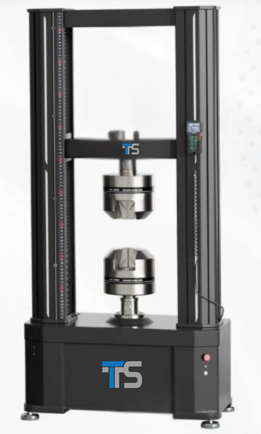
Electromechanical UTMs
Single & Dual Column Systems
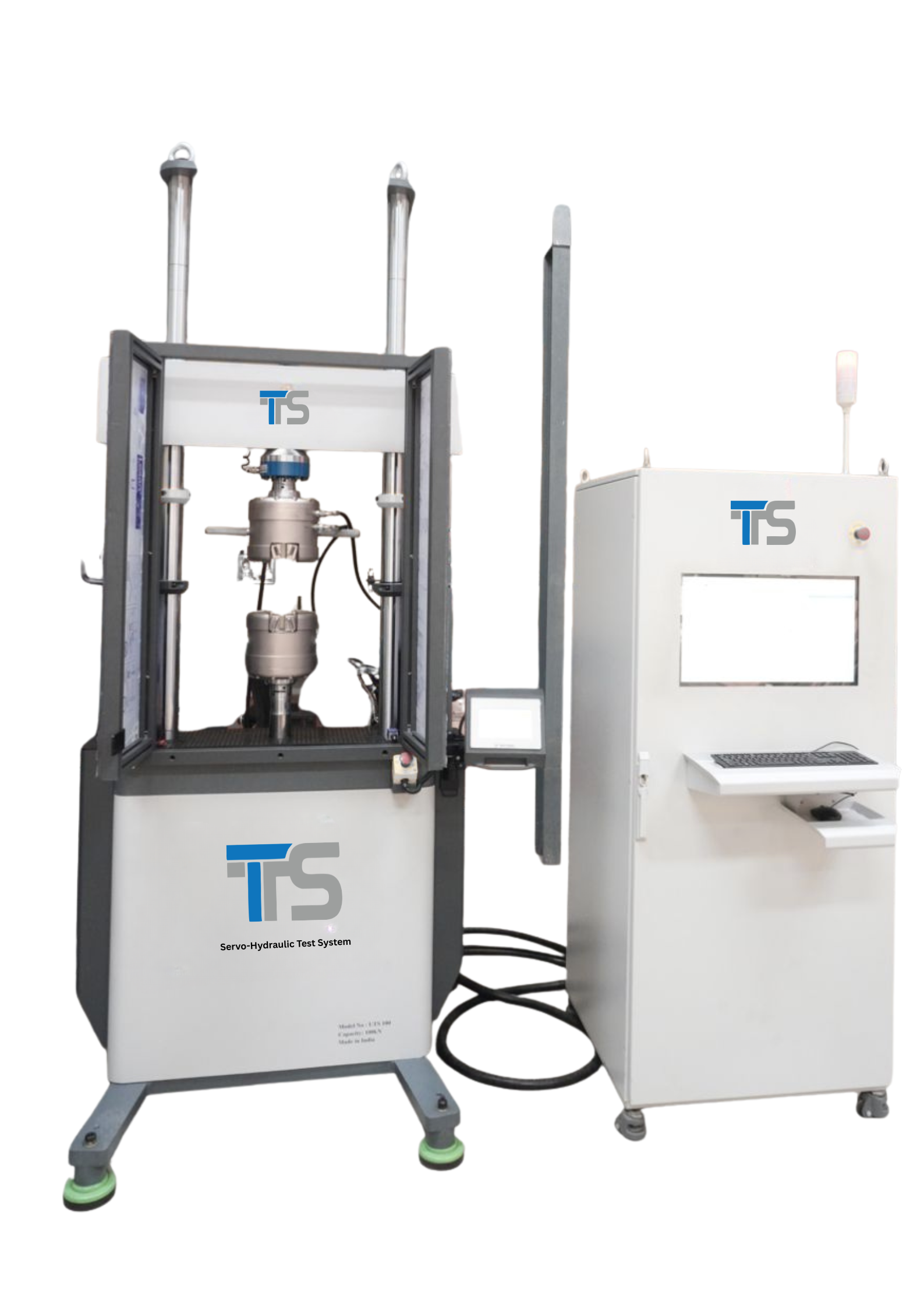
Dynamic & Fatigue Systems
High-Force Testing
Torsion Testing
Static & Dynamic Torsion

Micro UTMs
Small-Sample Testing

MTESTQuattro
Windows-based Test Controller

eP2
Standalone Digital Touchpad
Gauge Buster 3
Advanced Materials Indicator
Pi
Peak Load & Stress Indicator
DFG
Concrete Testing Indicator
GaugeSafe
Live Data Exchange Software

Tensile
Grips and Fixtures

Bend
Grips and Fixtures
Compression
Grips and Fixtures
Peel
Grips and Fixtures
Torsion
Grips and Fixtures
Puncture Fixtures
Grips and Fixtures
Fixtures by Test Standard
Grips and Fixtures
Other Fixturing
Grips and Fixtures
Load Cells
Testing Accessories
Test Chambers & Baths
Testing Accessories
Extensometers & Transducers
Testing Accessories
Test Sample Prep Tools
Testing Accessories
-
Products

Electromechanical
Universal Testing Machines
Servohydraulic
Dynamic Testing Machines

Accessories
Chambers, Grips and Fixtures

Hydraulic Testing Machines
Static Testing Machines
Data Acquisition (DAQ)
Signal Processing

Industrial Cameras
Vision Systems
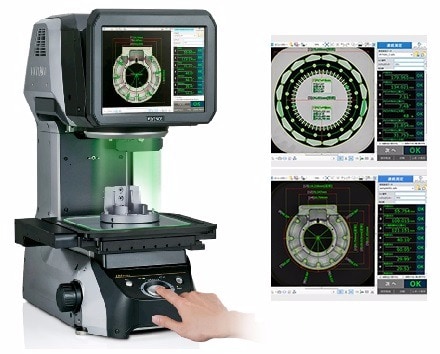
Optical Measurement
Non-contact Tech
.jpg)
Sensor
Precision Sensors
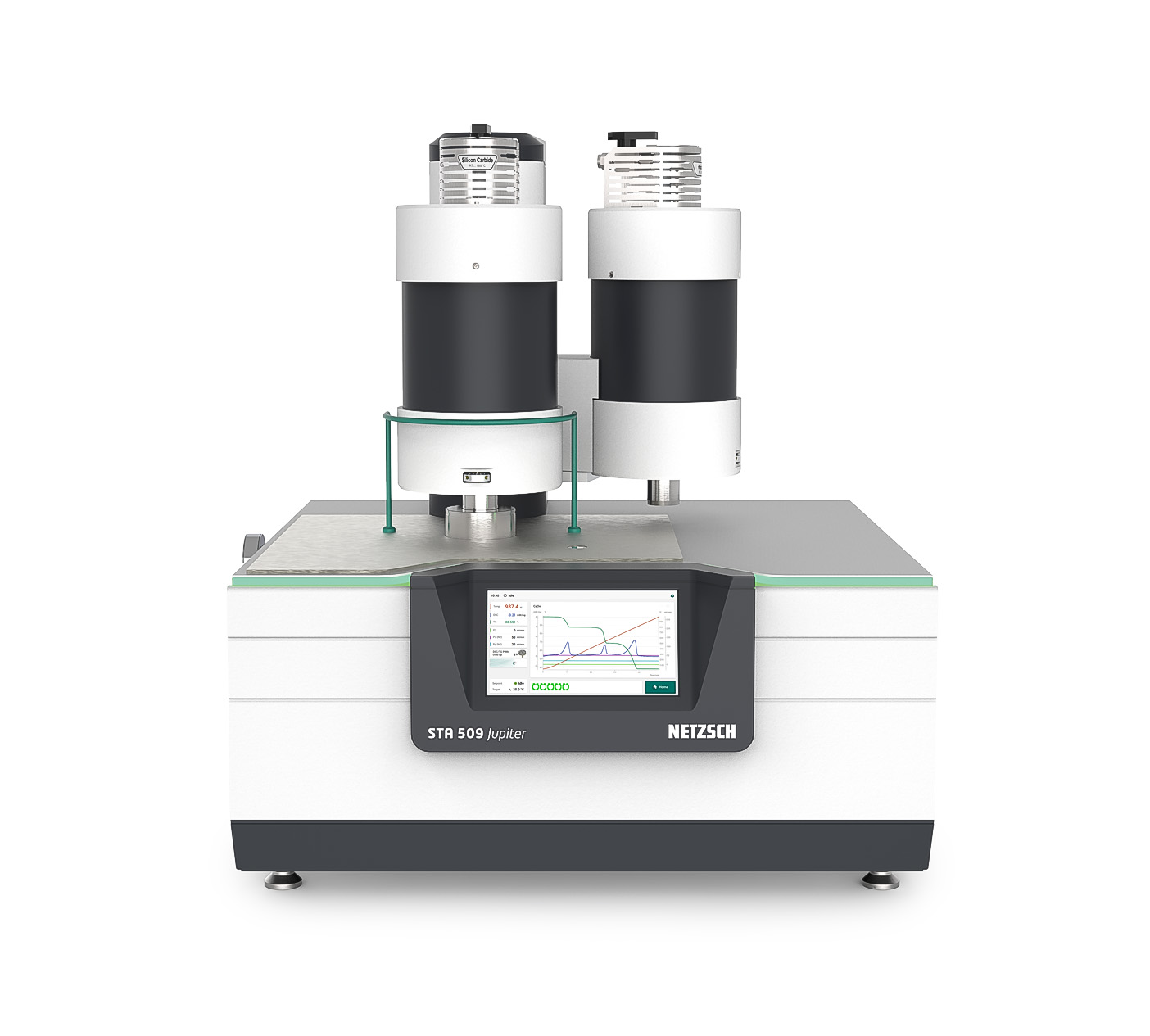





FATIGUE TESTS
WHAT IS A FATIGUE TEST?
It is a controlled and systematic procedure for evaluating the inherent ability of a material to withstand cyclic loading conditions. Such repeated stresses, often involving tension, compression, bending, torsion, or combinations of those, may cause damage to the material or failure in the case of the latter, even though loads applied are less than the ultimate strength of the material.
The output data of the fatigue test do contain very important information on the durability and safety of materials used in critical applications, from aerospace components to parts for automobiles and in structural engineering.
What Is The Phenomenon Of Fatigue In Materials?
This is a mechanical degradation phenomenon characterized by progressive, localised and permanent structural changes that occur in material under fluctuating stresses and strains. The phenomenon is often associated with the behavior of materials subjected to cyclic loading, bringing about a critical point at which the material may develop cracks and eventually fail, even though the applied loads may remain below the ultimate strength of the material.
The nature of plastic deformation brings about deformations that may take on a micro-scale when the materials are in a state of fatigue. Hence, accumulation of these localised deformations under continued stress leads to macroscopic damage and eventually to failure in fracturing the material or component.
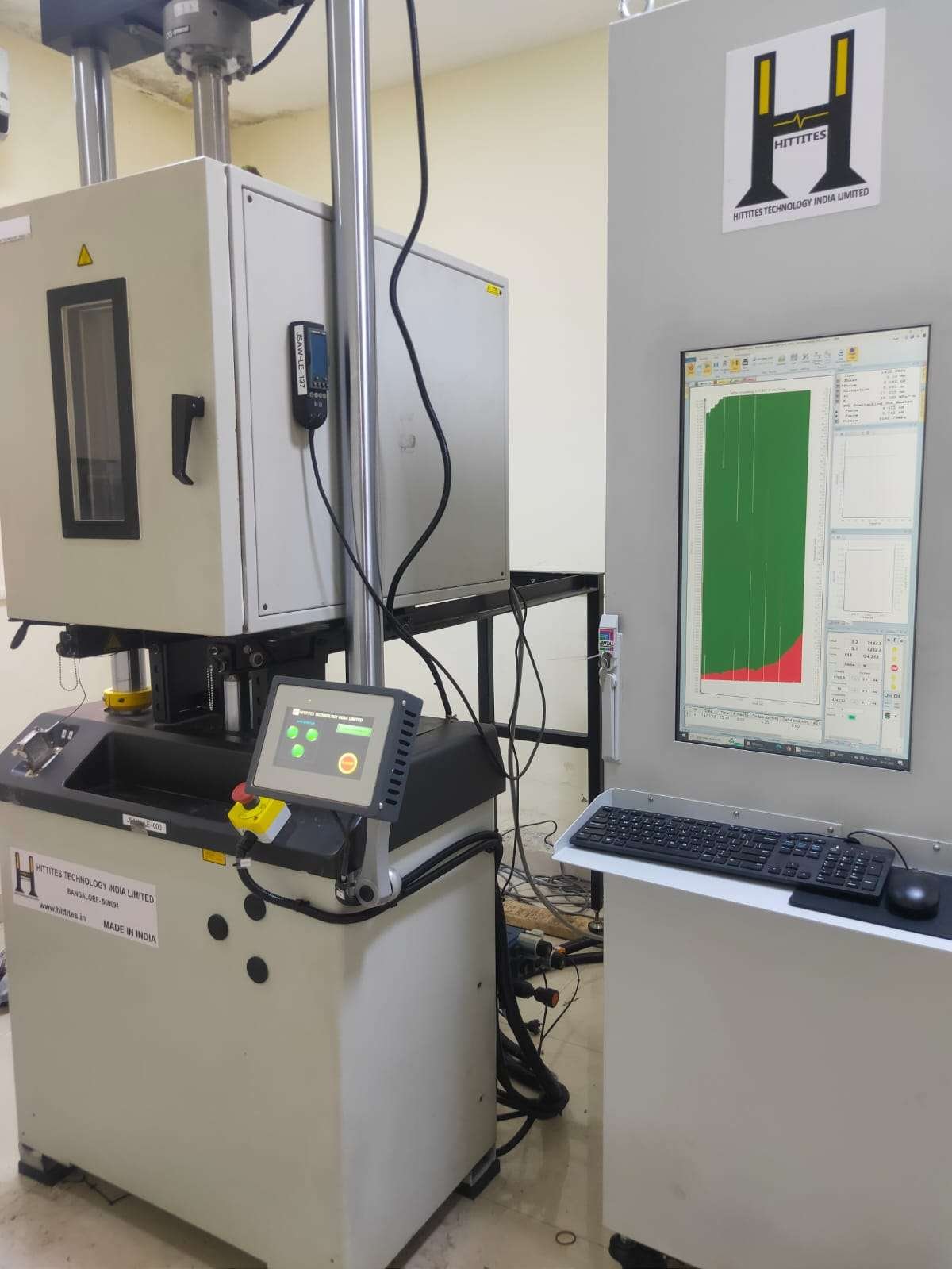
Fatigue Test: How To Do It?
Fatigue testing involves loading a specimen into the fatigue testing machine, applying a predetermined stress, and then unloading it to zero load in the opposite direction until the end of the test. The time for which the test is performed may be predefined by cycles or to the failure of the specimen, as specified by the test parameters.
Fatigue Testing Is Carried Out For Several Purposes.
The principal purpose of a fatigue test is typically to determine the service life expected in a material under cyclic loading. Besides this, fatigue strength and resistance against cracking are other significant parameters. Fatigue life refers to the cumulative number of cycles a material is capable of resisting under one specific load regime. A fatigue test is also useful to determine the maximum load a specimen can endure for a given number of cycles. All these attributes are of immense importance in industries where materials are subject to fluctuating, rather than constant, forces.
Fatigue of understanding and testing has become very important from car chassis in formula 1 to dental implants while designing the components subjected to cyclic loads. Fatigue tests have helped make predictions regarding the service life and assess the durability of the component through related levels of applied stress, providing assurance about the reliability of materials used across applications.
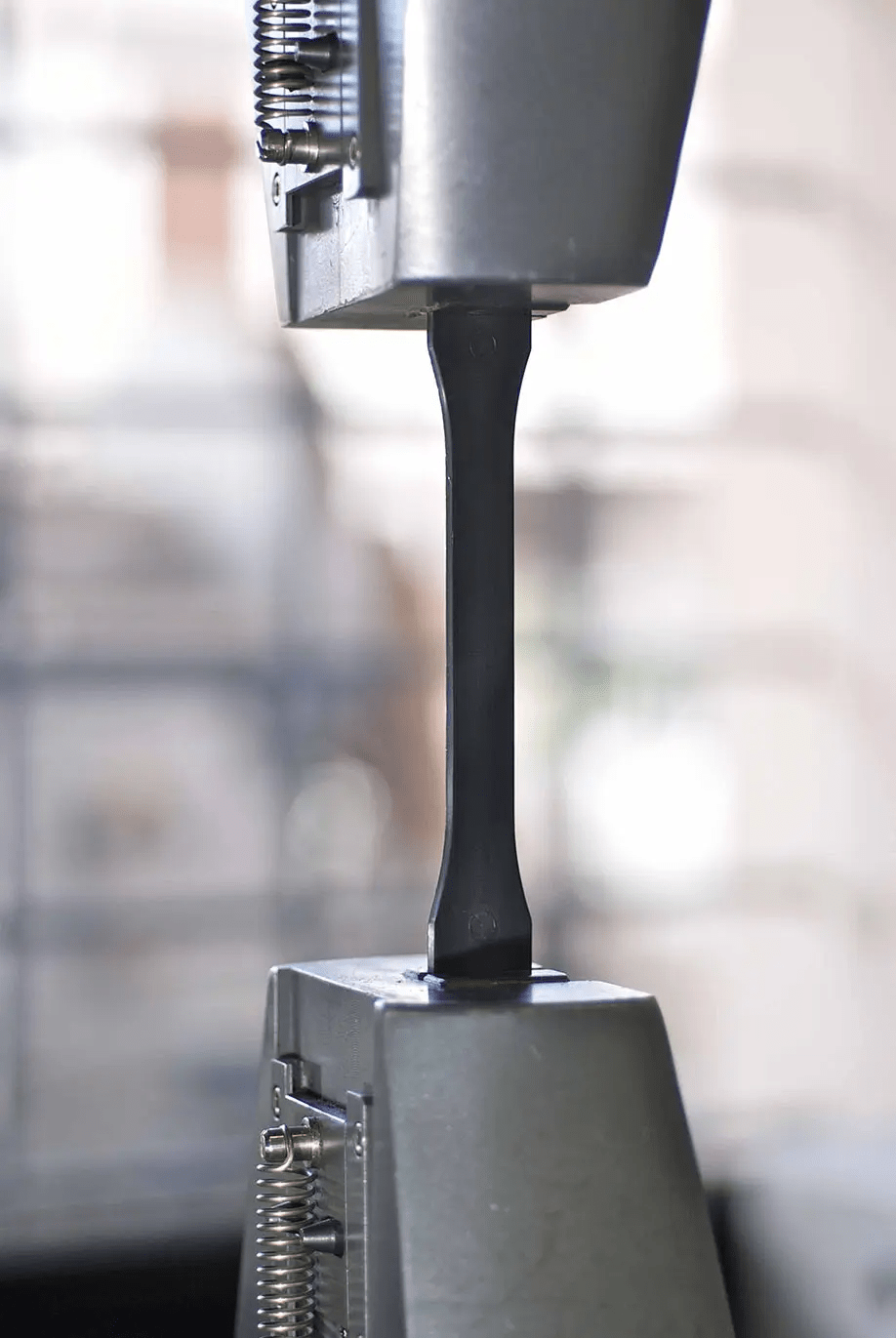
Materials Under Various Application Types.
- There are several kinds of fatigue test High cycle fatigue test: Standard fatigue test carried out at frequencies ranging approximately between 1 and 5000 Hz.
- HCF (DIN 50100) High cycle fatigue test: Standard fatigue test carried out at frequencies ranging approximately between 1 and 5000 Hz.
- Bending fatigue test on rotating bars, DIN 50113.
- Tensile-compression fatigue tests. Testing strength (fatigue strength) against cyclic stresses using tension, unloading and compression.
- Giga-cycle fatigue test: A fatigue test in which at least 1 x 10^9 cycles or more are applied in a very short time with ultrasonic vibrations, etc.
- Fatigue crack propagation test machine: A machine meant to study the rate of crack propagation under cyclic stresses.
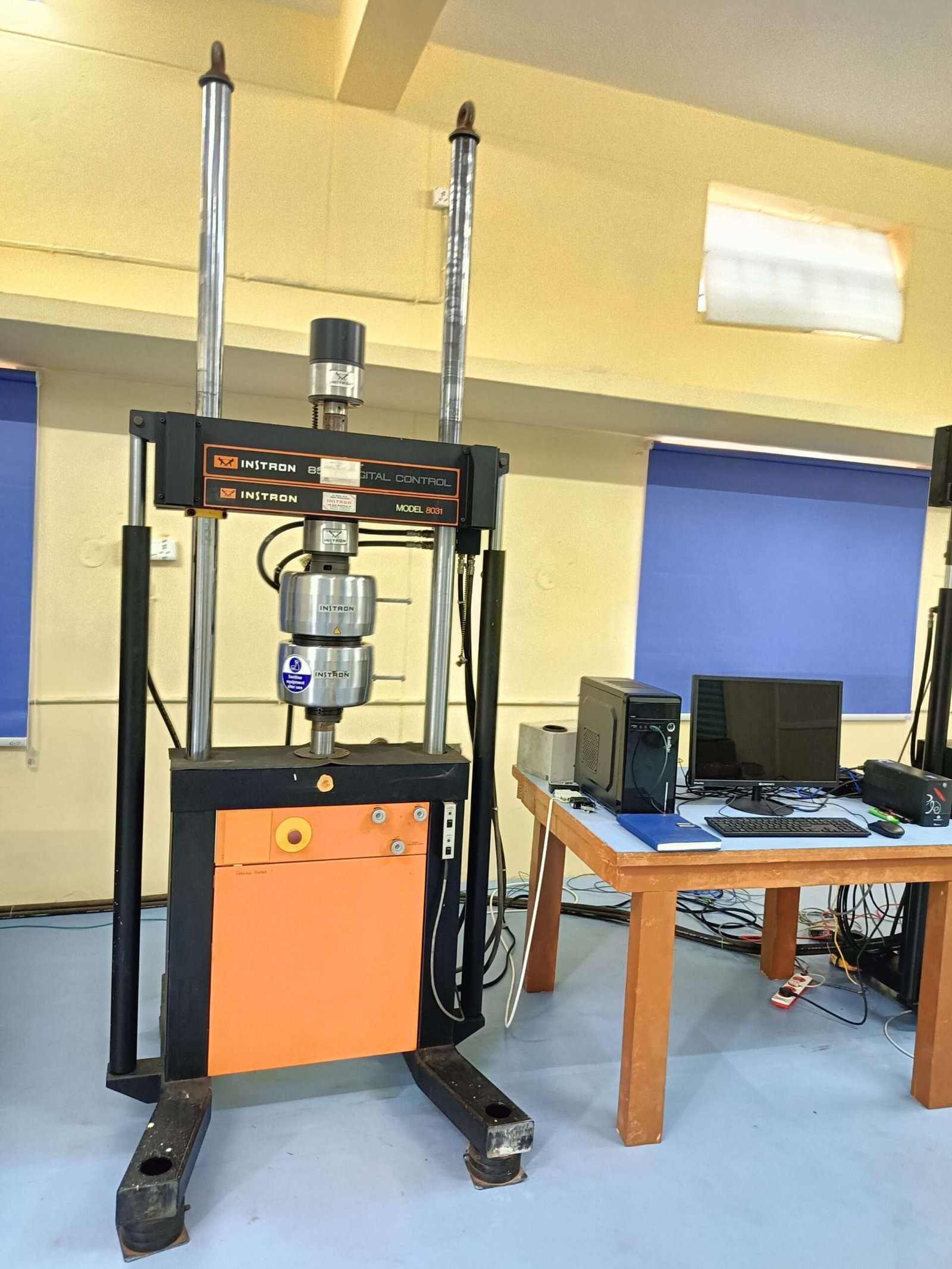
Most Widely Used Fatigue Tests
- ASTM D3479 – Tension-Tension Fatigue of Polymer Matrix Composite Materials
- ASTM D7774 – Flexural Fatigue Test Equipment for Plastic Materials
- ASTM E2207 – Equipment for Testing Axial-Torsion Fatigue in Thin-Walled Tubular Materials
- ASTM E2368 – Thermomechanical Fatigue Test Equipment
- ASTM E466 – Controlled-Load, Constant-Amplitude Fatigue Testing of Metals
- ASTM E467 – Constant Force Axial Fatigue Test System – Testing Machines
- ASTM E606 – Strain-Controlled Fatigue Testing at High and Low Cycles
- DIN EN 6072 – Aerospace Series – Metallic Materials – Test Methods – Constant Amplitude Fatigue Testing
- DIN 50100 – Controlled Load Fatigue Tests – Performance and Evaluation of Cyclic Tests with Constant Load Amplitude on Metal Specimens and Components
- ISO 1099 – Metallic Materials – Fatigue Tests – Controlled Axial Force Method
- ISO 7206 – Testing of Hip Implants
- ISO 14801 – Equipment for Fatigue Testing of Dental Implants
- ISO 15024 – Testing Machines – Interlaminar Fracture toughness Testing of Plastic Composite Materials
- ISO 22675 – Facilities for Fatigue Testing of Protective Ankle and Foot Devices

TTS Industrial Solutions Pvt Ltd, formerly known as Tweak Technik Solutions, was established in 2021. By 2022, we broadened our portfolio to include comprehensive lab services, and in 2024, we rebranded as TTS Industrial Solutions Pvt Ltd, an ISO 9001:2015 Certified Company.
CIN: U71200TS2024PTC184659
Get In Touch
Subscribe Now
Don't miss our future updates! Get Subscribed Today!