
-
Products

Electromechanical
Universal Testing Machines
Servohydraulic
Dynamic Testing Machines

Accessories
Chambers, Grips and Fixtures

Hydraulic Testing Machines
Static Testing Machines
Data Acquisition (DAQ)
Signal Processing

Industrial Cameras
Vision Systems
Optical Measurement
Non-contact Tech
.jpg)
Sensor
Precision Sensors
- Manufacturing









Fracture Testing
Fracture Testing
It is one of the most significant mechanical tests focussed on an understanding of a material's ability to withstand fracture toughness, therefore having an influence on the fracture resistance of a material-a cornerstone of material characterization. This guide into fracture toughness testing is comprehensive and, therefore, detailed; it illustrates its meaning, methods, standards, advantages, and good testing machines.
A Fracture Test Measures What?
The fracture toughness tests, in essence, include material resistance to fracture development as it breaks under gradually increasing load till it breaks. The initiation of fracture failure usually occurs due to the present flaws such as scratches, dents, or corrosion sites found within the material that grow into critical cracks resulting in structural failure. Such types of tests are often performed together with corrosion, fatigue, or elevated temperature measurements. In fact, these tests provide valuable information regarding the abilities of any material in varied environmental conditions.
What Is The Purpose Of Fracture Testing?
Fracture toughness tests offer profound insights into a material's structural integrity and durability, crucial in diverse industrial applications. A material exhibiting high fracture toughness signifies enhanced resistance to crack propagation, indicative of superior damage tolerance and fatigue resistance. Consequently, these tests play a crucial role in material selection, design optimization, and ensuring operational safety across myriad engineering disciplines.
- Determine the safety of the material.
- Determine the life of a material.
- Cost savings through reduced premature maintenance.
What Is The Goal Of Fracture Testing?
Fracture tests on a material give comprehensive information about its strength and durability, making it prime in many industrial applications. That is to say a high fracture toughness means that the material does resist crack propagation, which further means that the material has greater strength and damage tolerance as well as greater resistance to fatigue. It is this input towards material selection, design optimization, and safe operation that results from such tests, providing critical data in a vast range of the engineering fields.
- Material safety can be determined.
- Life of a material can be determined.
- Save cost through reduced early maintenance.
How To Perform A Fracture Test?
The methodology of fracture toughness tests revolves around the application of incremental loads to the material until failure occurs. Prior to testing, meticulous preparation is imperative, involving the creation of a fatigue notch to facilitate crack initiation commonly achieved through Electric Discharge Machining (EDM).
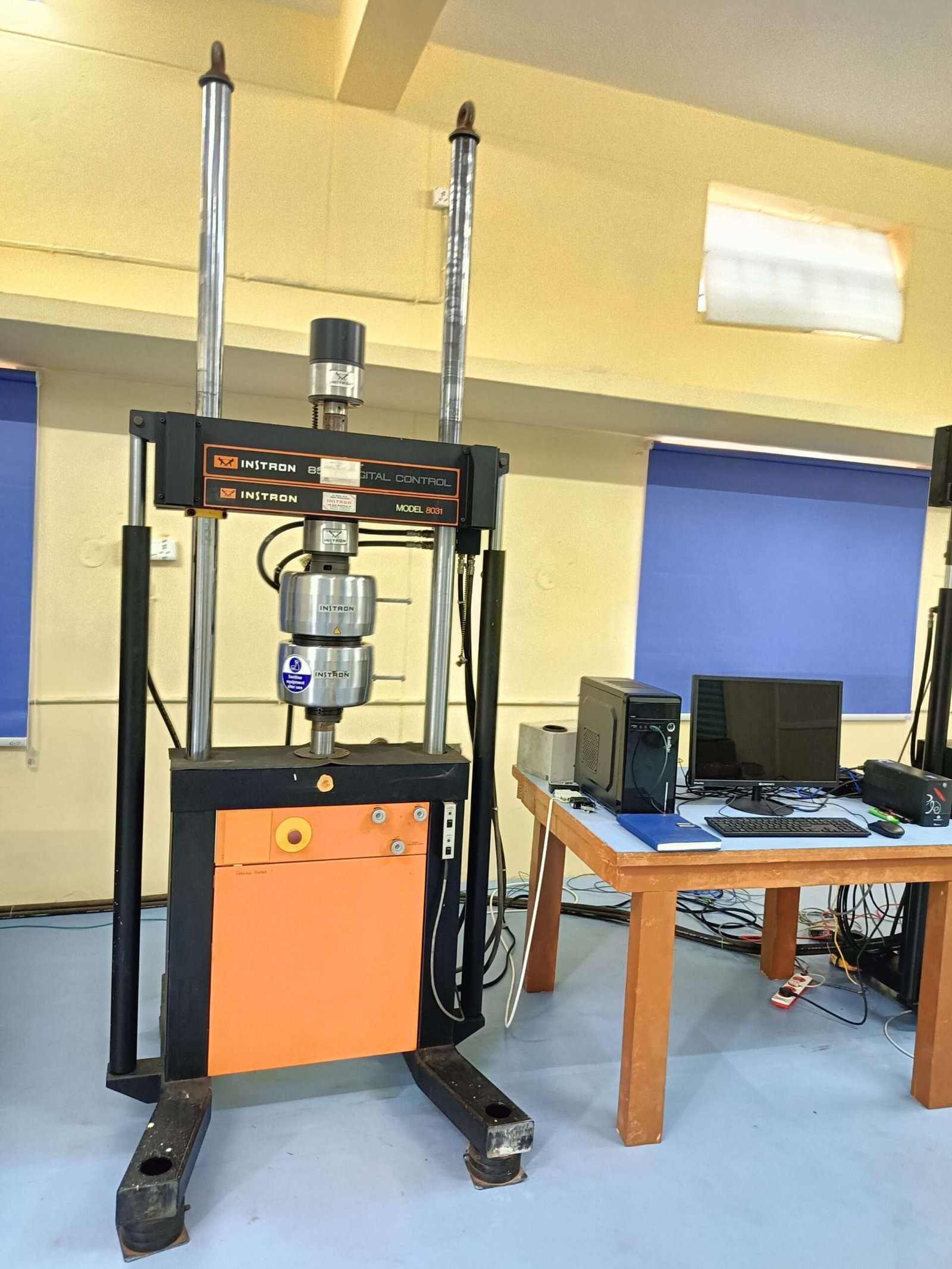
To conduct a fracture toughness test, the initial step entails the preparation of a testing sample featuring a pre-existing crack. This crack facilitates intended crack propagation during the test. Utilizing a universal testing machine (UTM) is imperative for conducting fracture toughness tests, given its versatility in accommodating various testing methodologies, including tensile testing. Moreover, adherence to reference standards is paramount, as prescribed by renowned organizations such as ASTM and ISO.
One common method employed in fracture toughness testing is the Crack Tip Opening Displacement (CTOD) test. This method entails subjecting a pre-cracked material specimen to a 3-point bend test setup. The procedural steps are as follows:
- Sample Preparation: Machining a notch at the midpoint of the material specimen, followed by inducing a fatigue crack at the machined notch.
- Loading Procedure: Placing the specimen within a 3-point bending setup machine to apply the requisite load.
- Strain Measurement: Attaching strain gauges to either side of the crack to meticulously measure strain variations throughout the testing process.
- Failure Analysis: Applying a progressive load until failure occurs, meticulously documenting the ensuing results for comprehensive analysis and evaluation.
Some Of The Most Popular Standardization In Fracture Testing
Standardization ensures procedural uniformity across diverse testing scenarios. Below is a list of common standards used in the industry:
- ASTM D5528: Standard test method for interlaminar fracture toughness of unidirectional polymer composites.
- ASTM D6671: Standard test method for mixed Mode I-Mode II interlaminar fracture toughness of unidirectional fiber-reinforced polymer matrix composites.
- ASTM E208: Standard Test Method for Conducting Drop-Weight Test to Determine Nil-Ductility Transition Temperature of Ferritic Steels.
- ASTM E399: Standard test method for Linear-elastic plane-strain fracture toughness of metallic materials.
- ASTM E561: Standard Test Method for KR Curve Determination.
- ASTM E604: Standard Test Method for Dynamic Tear Testing of Metallic Materials.
- ASTM E740: Standard Practice for Fracture Testing with Surface-Crack Tension Specimens.
- ASTM E1304: Standard Test Method for Plane-Strain (Chevron-Notch) Fracture Toughness of Metallic Materials.
- ASTM E1681: Standard Test Method for Determining Threshold Stress Intensity Factor for Environment-Assisted Cracking of Metallic Materials.
- ASTM E1820: Standard Test Method for Measurement of Fracture Toughness.
- ASTM E1921-22a: Standard test method for determination of reference temperature, T0, for ferritic steels in the transition range.
- ISO 12135: Metallic materials—Unified method of test for the determination of quasi-static fracture toughness.
- ISO 17281: Plastics—Determination of fracture toughness (GIC and KIC) at moderately high loading rates (1 m/s).

TTS Industrial Solutions Pvt Ltd, formerly known as Tweak Technik Solutions, was established in 2021. By 2022, we broadened our portfolio to include comprehensive lab services, and in 2024, we rebranded as TTS Industrial Solutions Pvt Ltd, an ISO 9001:2015 Certified Company.
CIN: U71200TS2024PTC184659
Get In Touch
Subscribe Now
Don't miss our future updates! Get Subscribed Today!